In the global fitness equipment supply chain, "Made in China" dominates. However, for B2B buyers aiming to build their own brands, the most critical decision often lies in choosing between OEM and ODM.
These terms are frequently confused, yet they represent entirely different business models, investment costs, and product ownership rights. Choosing the wrong model can lead to severe product homogenization, or worse, spiraling R&D costs and delayed market entry.
This article clarifies the essential differences between the two to help you make an informed strategic decision.
I. What is Spin Bike OEM? (Private Label Manufacturing)
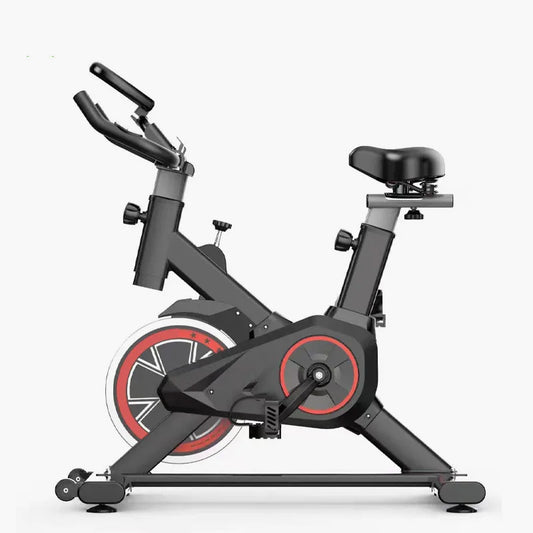
OEM (Original Equipment Manufacturer) refers to a model where the manufacturer possesses mature spin bike designs and molds. Your role is to customize these existing solutions with your brand identity.
Core Characteristic: Mature solutions with minimal structural modifications.
Customization Scope: Brand Logo, frame colors, packaging design, user manuals, and non-structural components (e.g., pedal specifications, saddle materials).
Ideal Scenario: You need to enter the market quickly, have a limited budget, or find that the factory’s existing models already perfectly meet your target customers' needs.

II. What is Spin Bike ODM? (Original Design Manufacturing)
ODM (Original Design Manufacturer) involves the manufacturer developing a product from scratch or performing deep structural modifications based on your specific functional requirements or unique design concepts.
Core Characteristic: Co-development with exclusive attributes.
Customization Scope: Frame geometry, resistance system tuning, smart console/App integration, and industrial design aesthetics.
Ideal Scenario: You aim to create a unique "hit product" unavailable elsewhere, or you are targeting a specific high-end market requiring significant differentiation.
III. OEM vs. ODM: A Core Comparison
We cut through the noise to analyze the core differences across four critical dimensions, helping you match the right strategy to your goals.
1. Design Control: Exclusive Customization vs. Mature Solutions
OEM (You Lead): You retain 100% control. From frame geometry and resistance algorithms to smart connectivity, everything is customized to your specs. This is the only path to creating a unique product and building a technical barrier.
ODM (Factory Leads): Based on the factory’s existing solutions with "minor tweaks" (e.g., colors, logos). The core architecture is defined by the factory. While time-to-market is fast, the risk of homogenization is higher, making it suitable for rapidly replicating successful models.
2. Capital Threshold: High Investment/High Return vs. Lean Startup
OEM: Requires bearing costs for molds, R&D, and certifications, resulting in high upfront investment. However, this buys you exclusive IP rights and higher long-term gross margins, ideal for financially robust brands.
ODM: No need to pay for expensive mold opening or R&D fees; main costs are limited to procurement. This significantly lowers the cost of trial and error, allowing you to focus capital on channel expansion and brand marketing.
3. Time-to-Market: Meticulous Crafting vs. Rapid Response
OEM: A lengthy process (3–6+ months) covering design, mold creation, and multiple pilot runs. Suitable for long-term brands not (not rushing) short-term monetization, dedicated to crafting an annual blockbuster.
ODM: Leveraging existing molds and production lines, shipments can be made in as little as 2–4 weeks. This is the best shortcut for capturing seasonal peaks (e.g., New Year fitness rush) or urgent restocking.
4. Intellectual Property (IP): Building a Moat vs. Shared Risk
OEM: All design patents and IP belong to you. The factory is strictly prohibited from leaking details. This builds a solid legal and technical moat, preventing competitor imitation.
ODM: IP typically belongs to the factory. The same model may be sold to multiple brands. Without an exclusive buyout agreement, you risk falling into a price war. We recommend locking in regional or channel exclusivity via contract to mitigate this risk.

IV.Decision Guide: Which Model Fits You?
In the current trade environment, the choice depends not just on budget, but on your brand strategy:
When to Choose OEM
Seeking Technical Barriers: You have proprietary designs that need protection.
Building a Brand Moat: You want to prevent competitors from copying your product.
Sufficient R&D Budget: You can afford mold opening and testing costs.
High Volume Expectations: Your projected sales volume is large enough to amortize development costs.
Complete Designs Ready: You have full drawings and just need precise execution.
Typical Case: Top international fitness brands use OEM to keep core technologies strictly in-house.
When to Choose ODM
Speed to Market: You need to seize a market window immediately.
No R&D Team: You lack an internal team or don’t want to divert focus to manufacturing.
Limited Budget: You want to test market reaction with low initial costs.
Acceptable Homogenization: You plan to differentiate through colors and packaging rather than structure.
Focus on Channels & Marketing: You prefer to invest resources in brand promotion and sales.
Typical Case: Cross-border e-commerce fitness brands use ODM to quickly launch diverse products with unique colorways and packaging to capture market share.
V. Why TOPKO is Your Ideal Manufacturing Partner?
With 15 years of expertise in the fitness equipment industry, TOPKO offers superior dual-mode capabilities in both OEM and ODM, flexibly matching your brand’s growth stage:
Extensive OEM Catalog: We possess dozens of mature models validated by the global market (from compact home bikes to commercial magnetic bikes), supporting 100% brand customization to help you launch instantly.
Hardcore ODM Team: Equipped with professional industrial designers and engineering teams, we support full-process development from ID sketches to structural testing, helping you create exclusive hit products.
Global Compliance Assurance:We are well-versed in CE, RoHS, and the latest 2026 Green/Low-Carbon certification standards, assisting you in clearing all global trade barriers.
There is no hierarchy between OEM and ODM. Countless successful brands started with ODM to validate their market, then transitioned to OEM to build their moat once established.
TOPKO is committed to growing with your brand. Regardless of your current stage, we provide tailored solutions to match your needs.