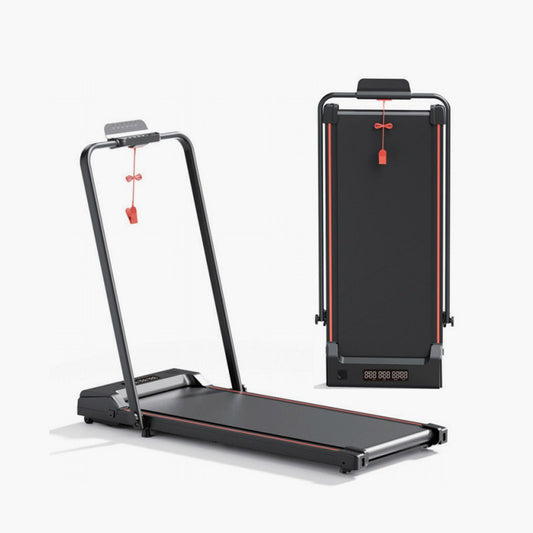
Folding treadmills have become best-sellers in both cross-border e-commerce and retail due to their space-saving design and suitability for home fitness. However, while China’s vast supply chain offers significant cost advantages, it also comes with varying levels of quality risk. Issues such as motor failure, running belt misalignment, and loose folding mechanisms can lead to high return rates and severely damage your brand reputation.
To ensure your procurement folding treadmills meets safety standards and satisfies end-users, here is your essential guide to navigating the market and mitigating risks.
I. Common Quality "Minefields" in Folding Treadmills
Folding Mechanism Hazards: This is a unique pain point for folding models. Inferior products often feature poor lock designs or short-lived hydraulic support parts, which may loosen over time, posing safety risks to users.
Motor and Control System Defects: To cut costs, some factories use underpowered or poorly cooled motors, resulting in loud operation and a short lifespan. Furthermore, sluggish console responses and unstable Bluetooth/App connectivity are frequent sources of customer complaints.
Poor Running Surface Experience: Low-quality materials lead to slippery or rapidly wearing running belts, while unstable deck supports cause noise and wobbling during high-intensity workouts, directly degrading the user experience.
Rough Framework and Craftsmanship: Frame materials with insufficient strength or weak welding lead to deformation over long-term use. Poor surface coating often results in peeling, affecting both the aesthetics and durability of the product.

II. 4 Core Strategies for Risk Mitigation in B2B Procurement
1. Partner with Established OEM/ODM Manufacturers
Prioritize manufacturers with years of industry experience. Before finalizing any deal, verify factory credentials, production capacity, and international certifications (such as CE, UL, and ISO 9001) to ensure stable quality control for export.
2. Define Technical Specifications in Writing
Never rely on verbal agreements. Clearly specify core parameters in your procurement contract, including running belt width, deck thickness, Continuous Horsepower (CHP), and folding weight capacity. For smart features, explicitly define software compatibility, data synchronization, and remote-control requirements.
3. Implement "Sample Testing + Small-Batch Trial"
Before placing bulk orders, always request a physical prototype to conduct comprehensive testing on noise levels, folding durability, and load-bearing performance. A small-batch trial is the most effective way to verify consistency before committing to larger quantities.
4. Supervise Production and Pre-Shipment Inspection
Consider monitoring key production stages, such as welding, surface coating, and motor tuning. Before shipment, mandate a full functional test and appearance inspection to ensure every unit meets the agreed-upon standards.
III. After-Sales and Spare Parts Support
A high-quality supplier should provide reliable spare parts support for high-wear components like running belts, motors, and consoles. Furthermore, they should supply comprehensive user manuals and training resources to reduce after-sales issues caused by improper operation from the source.
Why Partner with TOPKO?
With 13 years of expertise in the fitness equipment industry, TOPKO specializes in providing high-quality folding treadmill OEM/ODM services. We support small-batch trial orders and deep customization of smart features. Driven by our mature production systems, rigorous quality control (covering everything from welding processes to full-unit aging tests), and comprehensive after-sales support, we are dedicated to helping B2B clients build reliable, zero-defect treadmill brands with ease.