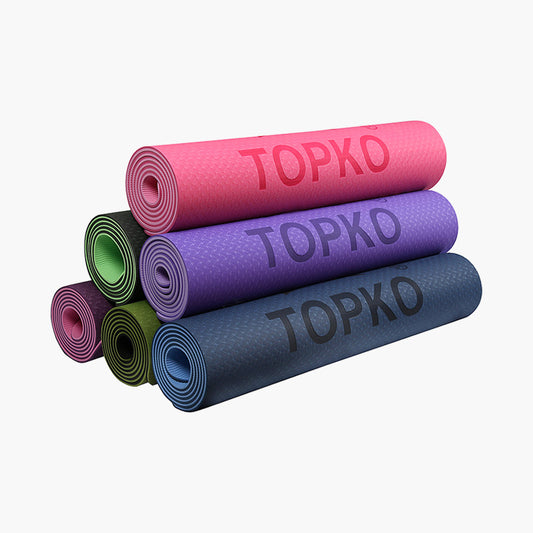
With the global surge in healthy lifestyles, the yoga mat market is experiencing explosive growth. According to customs data, China's sports equipment exports grew by over 15% in 2025, with the yoga mat category performing particularly strongly in European, American, and emerging markets.
However, for B2B buyers, the sheer number of Chinese suppliers varies wildly in quality. Choosing the wrong partner can lead to:
❌ Quality Control Failures: Batch color variations, excessive odors, or substandard slip resistance.
❌ Delivery Delays: Insufficient capacity during peak seasons, disrupting your sales plans.
❌ Compliance Risks: Lack of SGS, REACH, or RoHS certifications, leading to customs seizures.
❌ Communication Black Holes: Lack of foreign trade experience, resulting in a failure to understand customization needs.
As a fitness equipment manufacturer with 15 years of industry experience, TOPKO has compiled an efficient screening solution to help you lock onto true "powerhouse factories" amidst the sea of suppliers.
Step 1: Define Core Materials – Lock onto the Right Factory Type
Production processes for different yoga mat materials vary significantly. Leading factories usually specialize in specific fields:
PVC (Low Cost / Durable): Suitable for supermarket promotions or basic gym configurations.
TPE (Eco-friendly / High Cost-Effectiveness): The mainstream choice for the mid-range market, valued for its lightweight feel and good grip.
Natural Rubber (High-End / Professional): The top choice for professional brands seeking exceptional grip and durability.
Cork / Hybrid Materials (Design-Focused): Targets high-end niche markets focused on natural properties and sweat-resistant grip.
Suggestion: During initial communication, inquire about the factory's main production line. The higher their specialization, the more stable their quality control tends to be.

Step 2: Core Screening Criteria – Identifying "Real Factories" in 4 Steps
Many trading companies pose as factories. B2B buyers must scrutinize the following four hard indicators:
1. Qualifications & Certifications
System Certifications: Must hold BSCI, SEDEX, or ISO9001.
Product Compliance: Depending on your target market, ensure they meet REACH, Oeko-Tex Standard 100, and RoHS standards.
2. R&D and Customization Capabilities (OEM/ODM)
A reliable factory doesn't just assemble; it should possess capabilities for mold opening, color matching, logo customization, and packaging design.
3. Production Scale & Delivery Lead Times
Inquire about monthly capacity and peak-season lead times. Factories equipped with automated cutting lines and eco-friendly printing equipment typically offer higher delivery stability.
4. Quality Control Processes
Require raw material test reports and ensure they support third-party in-process inspections (e.g., SGS) to guarantee consistency between samples and mass production.
Step 3: Quality Control Solutions – SOP from Sample to Mass Production
To prevent discrepancies between samples and final goods, implement this Standard Operating Procedure (SOP):
Sampling Phase: Conduct tensile strength and slip resistance tests. Verify thickness, odor levels, and edge-cutting craftsmanship.
In-Process Inspection: Commission third-party inspectors to monitor production, focusing on color consistency, printing odors, and label adhesion.
Pre-Shipment Inspection: Perform sampling based on international standards (AQL) to ensure batch consistency before loading.
Step 4: Communication & Supply Chain Synergy
In cross-border procurement, hidden costs often stem from poor communication. A high-quality factory should possess:
Professional Foreign Trade Team: Proficient in trade terms like FOB, CIF, and DDP.
Flexible MOQ Policies: Capable of handling large container orders while willing to support new product trials (e.g., 300–500 units).
Logistics Coordination: Able to seamlessly coordinate sea freight, air freight, and overseas warehouse distribution.

Why Do Clients from 50+ Countries Choose TOPKO?
If you are looking for a source partner that integrates R&D, manufacturing, and compliance, TOPKO is your ideal choice.
Direct Factory Supply: Own modern production lines with no middleman markups, offering superior cost competitiveness.
Deep OEM/ODM Experience: 15 years of expertise, familiar with the rigorous standards and service workflows of international brands.
Strict Quality Control System: Executes industry-leading quality standards, keeping defect rates below 0.5%.
Flexible MOQ Policy: Supports small-batch trial orders, significantly reducing your new product trial costs.
Comprehensive Compliance: Full product line certified by CE, RoHS, REACH, BSCI, and other major international standards for worry-free export.
Finding a reliable yoga mat factory in China is challenging, but by following a scientific screening process, you can minimize risks to the lowest level. TOPKO is dedicated to providing global B2B clients with a closed-loop solution ranging from product design and raw material sourcing to manufacturing and logistics.