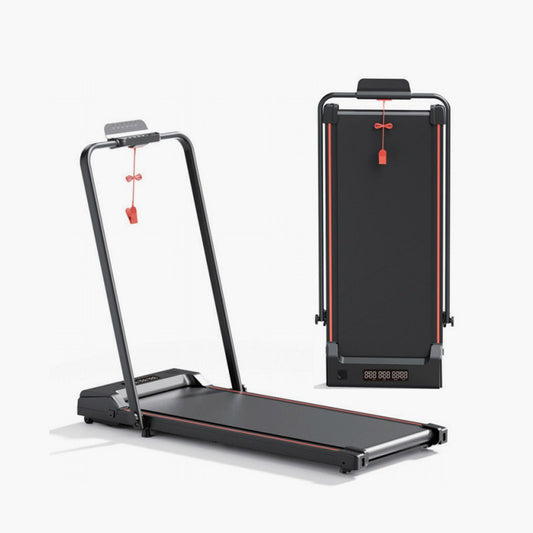
In the global home fitness equipment market, Chinese-made treadmills are widely adopted due to their cost efficiency and mature supply chains. However, for B2B buyers, brand owners, and distributors, motor durability and operational noise remain the core factors affecting product reputation, after-sales costs, and long-term brand equity.
So, how can you systematically and rationally evaluate the motor quality of a Chinese home treadmill without relying on subjective experience?
The key to evaluating a motor lies in shifting focus from "power figures" to current load and structural craftsmanship. A qualified evaluation report should include CHP (Continuous Horsepower) verification, temperature rise test data, and a decibel-metered noise curve under load. Mature suppliers like TOPKO typically provide comprehensive motor test reports rather than just basic manual parameters—this data is the foundation for professional B2B decision-making.
1. Evaluating Motor Durability: Beyond the "Peak Horsepower" Trap
When reviewing specifications, it is critical to distinguish between PHP (Peak Horsepower) and CHP (Continuous Horsepower).
CHP is the Gold Standard: Peak horsepower only represents instantaneous burst power. CHP is the true measure of a motor's ability to operate continuously under full load. For home treadmills, a specification of 2.0 CHP to 3.0 CHP is recommended.
Amp Draw Test: This is an authoritative diagnostic method. A high-quality home treadmill should draw a current of less than 4-6 Amps at 8 km/h without a load. If the reading is excessively high, it indicates internal friction in the bearings or brushes, signaling a shortened lifespan.
Insulation Class and Heat Resistance: Verify if the motor meets Class F (155°C) or Class H (180°C) insulation standards. Export experts like TOPKO typically utilize high-grade heat-resistant coils to prevent motor burnout during prolonged operation.

2. Noise Level Assessment: More Than Just a "Decibel Value"
Noise is a direct indicator of manufacturing precision, reflecting the fit of carbon brushes and the quality of dynamic balancing.
Decibel Benchmarks:
No-load noise (1-4 km/h): Should be below 50 dB (equivalent to light conversation).
High-speed load (12-16 km/h): Should be controlled within 70 dB.
Low RPM with High Torque: Quality motors usually operate at lower rated speeds (typically below 4000 RPM). Lower RPM results in less frictional heat and reduced fan noise.
The BLDC (Brushless) Trend: The 2026 market trend is shifting toward Brushless DC (BLDC) motors. Due to the absence of brush friction, noise levels are typically 30% lower than traditional PMDC motors, while durability is significantly enhanced.
FAQ: Common B2B Procurement Questions
Q: Why do some low-priced treadmills claim high horsepower but fail so quickly?
A: Many budget-tier factories exaggerate PHP to mask an extremely low CHP. These motors overheat rapidly under sustained load.
Q: How can I judge motor quality without disassembling the machine?
A: Run the treadmill at its maximum speed and listen for "metallic grinding" or "high-frequency squealing." After turning off the power, rotate the motor shaft manually; if you feel significant resistance or a "gritty" texture, it indicates poor bearing quality.
For buyers aiming to build long-term brand value, choosing a manufacturer that speaks through data, standards, and long-term case studies is more effective than chasing raw parameters.
This is why an increasing number of international clients, when filtering Chinese home treadmill suppliers, lean toward companies like TOPKO—partners who possess mature testing systems, stable production capacity, and extensive B2B service experience.