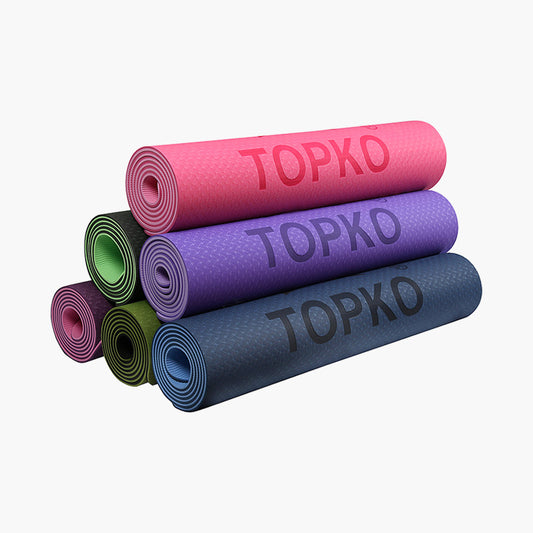
The Yoga & Pilates Mats market continues to expand rapidly as global interest in wellness, mindfulness, and functional fitness accelerates.
The market was valued at approximately USD 1.2 billion in 2024 and is projected to reach USD 2.5 billion by 2033, registering a 9.1% CAGR from 2026 to 2033. Growth is driven by the increasing adoption of yoga and Pilates across both home and studio environments.
Key Market Highlights
Regional Landscape
North America leads the market with ~35% share, supported by a mature wellness ecosystem
Asia-Pacific follows closely (~30%) and is the fastest-growing region, with growth exceeding 10% YoY
Europe accounts for ~25%, while Latin America and the Middle East & Africa each hold ~5%
Product Segmentation
Foam Mats dominate the market (~50%) due to affordability, comfort, and lightweight design
Rubber Mats account for ~30%, favored for grip and durability
PVC Mats represent ~20%, maintaining demand in entry-level segments
Foam mats are expected to remain the fastest-growing category, driven by widespread use in both home fitness and commercial studios.
Market Opportunities & Trends
Personalization & performance: Rising demand for mats tailored to specific use cases such as hot yoga, travel, and studio training
Sustainability focus: Growing preference for biodegradable, non-toxic, and eco-friendly materials
Emerging markets: Rapid expansion in Asia-Pacific, especially China and India, supported by a growing middle class and increased fitness awareness
Product innovation: Advancements in grip, cushioning, antimicrobial coatings, and material science are becoming key differentiators
Outlook
As yoga and Pilates continue to integrate into daily lifestyles worldwide, product innovation, sustainability, and regional expansion will define competitive advantage in the years ahead.
For manufacturers, brand owners, and distributors, the Yoga & Pilates Mats category represents a scalable, innovation-driven segment with strong long-term growth potential.