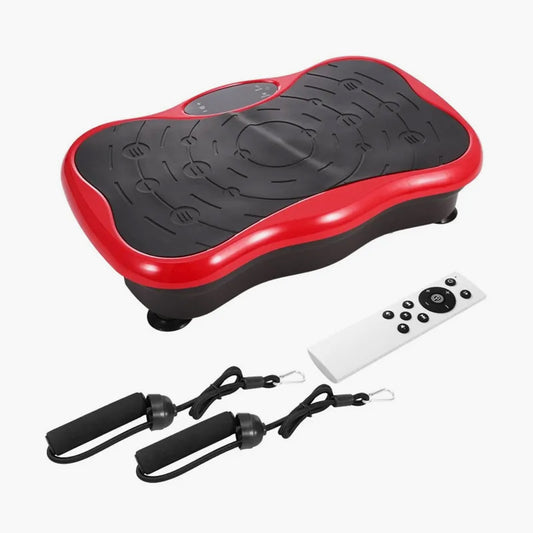
The global Vibration Plate Exercise Machine Market was valued at USD 1.2 billion in 2024 and is projected to reach USD 2.5 billion by 2033, exhibiting a Compound Annual Growth Rate (CAGR) of 9.2% from 2026 to 2033. This growth is primarily fueled by escalating health consciousness and the rising demand for time-efficient, innovative fitness solutions.
1. Market Overview and Drivers
Question: Why is the vibration plate market experiencing such significant growth?
Conclusion: The convergence of the $96.7 billion global fitness industry and the demand for compact, high-efficiency equipment is driving the market.
Whole-Body Vibration (WBV) Training: This method focuses on enhancing muscle strength, improving balance, and promoting circulation, making it highly appealing to athletes, the elderly, and rehabilitation patients.
Lifestyle-Related Diseases: The rising prevalence of sedentary lifestyle issues is pushing consumers toward convenient home fitness solutions.
Technological Advancement: Modern machines feature customizable frequencies and smart technology, expanding their appeal from beginner-friendly home models to professional-grade equipment.
2. Market Segmentation by Type and Region
Question: Which regions and product types are dominating the market?
Conclusion: North America remains the largest revenue contributor, while the Asia-Pacific region is the fastest-growing market.
Regional Performance (2023):
North America (38%): Led by a large consumer base and established fitness culture.
Asia-Pacific (30%): Emerging as the fastest-growing region due to rising health awareness in China and India.
Europe (18%), Latin America (7%), and Middle East & Africa (7%): Steady growth driven by rehabilitation and premium fitness trends.
Product Type Breakdown:
Vertical Vibration Plates (45%): Currently hold the largest share.
Oscillating Vibration Plates (35%): Projected to be the fastest-growing sub-segment due to their popularity in muscle stimulation and physical therapy.
Linear Vibration Plates (20%): Primarily used in specialized training and medical settings.
3. Application Channels and Trends
Question: How are consumers purchasing these machines, and what are the new opportunities?
Conclusion: While offline retail currently dominates, online sales are the primary growth engine for the next decade.
Sales Channels:
Offline (70%): Dominates due to established retail networks and the consumer's desire for hands-on demonstrations.
Online (Fastest Growth): Rapidly expanding as more consumers shift toward digital purchasing and space-saving, shippable home equipment.
New Market Opportunities:
Smart Integration: Bluetooth connectivity, mobile app integration, and AI-driven personalized workout programs.
Rehabilitation & Aging Populations: Use in physiotherapy for improving circulation and bone density in elderly patients.
Wellness Tourism: Integration into spas, resorts, and luxury hotels as a value-added wellness therapy.
4. Market Dynamics and Future Outlook
Question: What are the key takeaways for the next 10 years?
Conclusion:The market will benefit from a shift toward holistic wellness and high-tech, space-saving designs.
Efficiency:The ability to provide an effective workout in a fraction of the time required by traditional methods makes these machines ideal for busy modern lifestyles.
Post-Pandemic Shift: The surge in home fitness equipment demand triggered by COVID-19 has created a lasting consumer base.
Industrial Application:Beyond personal use, vibration plates are increasingly vital in sports training facilities and specialized physiotherapy clinics.
The vibration plate exercise machine market is evolving from a niche fitness tool into a mainstream health and wellness essential. By focusing on smart technology, medical rehabilitation, and Asia-Pacific expansion, manufacturers can tap into a market that is set to more than double in value by 2033. For e-commerce sellers and brands, prioritizing safety, oscillating technology, and online marketing will be the key to capturing this growing demand.