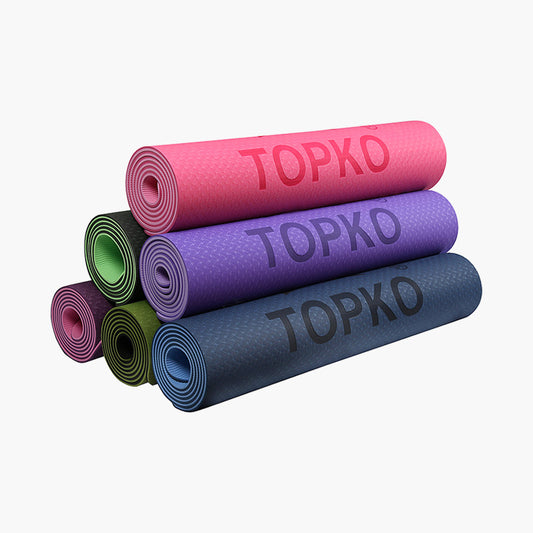
PVC Non-Slip Yoga Mats Market size was valued at USD 250 million in 2025 & is estimated to reach USD 450 million by 2034, exhibiting a CAGR of 7.5%from 2026-2034
The PVC non-slip yoga mats market is a fitness industry segment focused on high-performance mats made from PVC. It combines health-conscious behavior, material innovation, and safety/durability needs. Core value: superior grip, longevity, cost-effectiveness for both professionals and casual users.
PVC Non-Slip Yoga Mats Market Dynamics 2026-2034
Market shaped by tech innovation, consumer preferences, and regulations. Growing wellness industry drives demand for durable, safe, affordable mats, advancing material science. Growth fueled by yoga mainstream adoption, safety awareness, e-commerce. Environmental concerns push balance between performance and sustainability. Strategic innovation and adaptability define future growth.

PVC Non-Slip Yoga Mats Market Value Chain Analysis
PVC non-slip yoga mats value chain starts with raw material procurement (PVC resins, plasticizers, stabilizers, anti-slip additives). Key suppliers: Shin-Etsu Chemical, Formosa Plastics. Manufacturing includes compounding, extrusion, surface finishing. Technologies like automated extrusion and precision coating enhance consistency, slip resistance, reduce waste, improve throughput, impacting profit margins.
PVC Non-Slip Yoga Mats Market Geographic Scope
North America: USD 1.2B (2024) → 2.0B (2033), CAGR 5.8%. Driven by fitness studios, home trends. Future: sustainable PVC, safety rules, corporate wellness.
United States: USD 0.8B (2024) → 1.4B (2033), CAGR 6.0%. Strong e-commerce, premium demand. Leading brands: Liforme, Manduka, Gaiam. Future: smart features, green products.
Asia Pacific: USD 2.5B (2024) → 4.2B (2033), CAGR 6.2%. Urbanization, rising incomes. Key: India, China, Australia. Opportunities: hybrid materials, e-commerce, lightweight designs.
Japan: USD 0.4B (2024) → 0.65B (2033), CAGR 4.8%. Mature market, focus on quality & eco-PVC. Innovations: antimicrobial, grip, lightweight. Future: bio-based additives, smart mats.
China: USD 1.8B (2024) → 3.2B (2033), CAGR 6.0%. Global production hub, rapid fitness growth, government health push. Shift to eco & antimicrobial PVC. Future: hybrid materials, premium lines.
South Korea: USD 0.3B (2024) → 0.55B (2033), CAGR 5.5%. Demand for eco, antimicrobial, smart features. Future: IoT sensors, eco-lines, e-commerce.
Europe: USD 1.0B (2024) → 1.7B (2033), CAGR 6.0%. Germany & UK lead in recycled/bio-based PVC. Future: sustainable manufacturing, digital engagement, premium portable mats.
Germany: USD 0.3B (2024) → 0.50B (2033), CAGR 5.4%. Strict regulations drive eco-PVC. Innovations: bio-additives, antimicrobial, lightweight. Future: smart features, recycled content.
United Kingdom: USD 0.2B (2024) → 0.34B (2033), CAGR 5.2%. Environmental awareness boosts sustainable mats. Future: bio-based & recycled PVC, digital marketing, smart features.
Latin America: USD 0.6B (2024) → 1.0B (2033), CAGR 6.0%. Brazil & Mexico lead. Growth depends on sustainable formulations, e-commerce, lightweight portable designs.
Middle East & Africa: USD 0.4B (2024) → 0.70B (2033), CAGR 6.2%. UAE, South Africa, Nigeria. Advances in eco-PVC & antimicrobial coatings. Opportunities: hybrid materials, region-specific products.
From 2026 to 2033, the PVC non-slip yoga mats market will be driven by tech innovation, regulations, and consumer preferences. Sustainability pushes biodegradable/recyclable PVC, requiring R&D and raising entry barriers. Companies focusing on innovation, sustainability, and digital transformation will seize opportunities, redefining product standards, profitability, and competitive positioning.