
In the global fitness equipment market, spin bikes have become one of the core cardio products actively adopted by gyms, fitness studios, e-commerce platforms, and fitness brands.
For fitness equipment wholesalers, chain gym purchasers, and brand owners, selecting the right spin bike is not a simple task. In an increasingly competitive and saturated market, the key challenge is identifying which products deliver long-term commercial value—and which may lead to high after-sales costs and operational risks.
Compared with traditional exercise bikes, spin bikes offer higher training intensity, stronger structural stability, lower maintenance costs, and sustained market demand, making them particularly suitable for B2B procurement scenarios. This guide outlines what a spin bike is, its business value, and the key factors B-end buyers should evaluate.
What Is a Spin Bike?
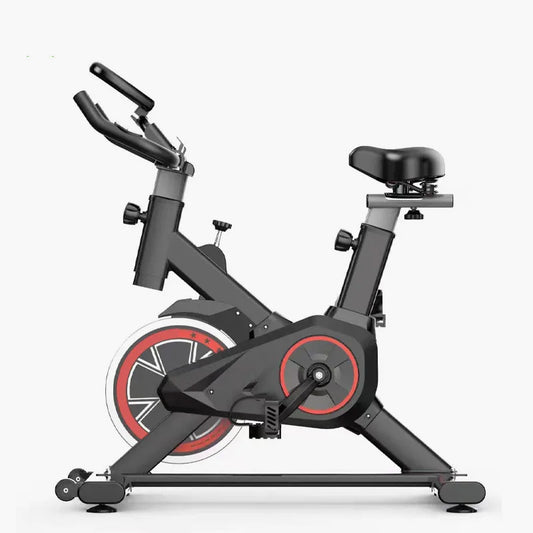
A spin bike is an indoor cycling machine designed to simulate outdoor riding. It is widely used in group cycling classes, HIIT training programs, and home fitness environments.
Typical characteristics of a spin bike include:
Heavy flywheel for smooth and stable riding
Adjustable resistance to support multiple training intensities
Multi-position adjustable handlebars and saddle
Reinforced steel frame designed for high-frequency use
Key Differences Between Spin Bikes and Traditional Exercise Bikes
From a B2B procurement perspective, spin bikes demonstrate clear advantages in training application, usage scenarios, and commercial return.
Spin bikes are designed for high-intensity, group-based, and frequent use, making them suitable for both commercial facilities and home retail channels. In contrast, traditional exercise bikes primarily serve basic cardio needs and are typically positioned for individual home users.
Structurally, spin bikes feature stronger frames and heavier flywheels, enabling long-term operation under high load. Their mature mechanical design and simplified maintenance requirements help reduce downtime and operating costs for commercial facilities.
As a result, spin bikes offer a more predictable return on investment, with higher utilization rates and stable long-term revenue potential—key reasons they are preferred by B-end buyers.
Why Spin Bikes Are Highly Valued by B2B Buyers
1. High Cost-Performance Ratio for Scaled Procurement
Mature structure and low failure rates make spin bikes well suited for bulk purchasing by gyms, chain studios, and online sales channels.
2. Multi-Channel Sales Flexibility
Spin bikes can be deployed across:
Commercial gyms and private studios
Cross-border e-commerce platforms
Sporting goods distribution networks
Hotels, corporate wellness, and institutional procurement
This reduces dependency on a single sales channel.
3. Long-Term Market Demand Stability
With the continued growth of indoor cycling and home fitness, spin bikes maintain stable demand across Latin America, Europe, the Middle East, and Africa.

Key Factors B2B Buyers Should Evaluate When Sourcing Spin Bikes
Frame & Stability: Thick steel tubing and high-strength welding for safety under intensive use
Resistance System: Friction resistance for mass markets; magnetic resistance for mid-to-high-end positioning
Flywheel Weight: 15–20 kg flywheels provide smoother, more professional riding feedback
OEM / ODM Capability:Support for logo branding, color customization, packaging, and compliance labeling
Dual-Use Strategy: Commercial and Home Markets
An increasing number of B2B buyers adopt dual-purpose spin bike models that serve both commercial class environments and home retail markets. This strategy helps:
Reduce SKU complexity
Improve inventory turnover
Enhance overall profitability
How to Select a Reliable Spin Bike Supplier
B-end buyers should carefully assess:
Manufacturing experience and factory scale
Quality control systems and certifications
Bulk production capacity and export experience
After-sales service and spare parts support
A stable and transparent supply chain is the foundation of long-term cooperation.
As fitness consumption continues to shift toward indoor, flexible, and space-efficient training solutions, spin bikes will remain a long-term core category for B2B buyers.
For enterprise customers, a spin bike is not merely a single product—it represents a foundation for stable sales, brand expansion, and sustainable returns.