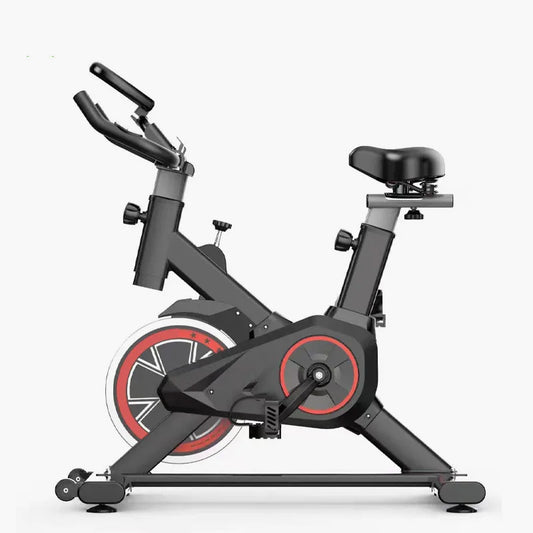

As the country with the second-largest number of gyms worldwide, Brazil’s fitness market continues to demonstrate strong growth momentum through 2026. With ongoing upgrades in fitness consumption, spinning bikes have become a core product category for gyms, chain studios, e-commerce platforms, and distributors across the country.
Compared with traditional cardio equipment, spinning bikes have steadily strengthened their position in Brazil’s B2B procurement landscape due to their high cost efficiency, strong adaptability, and stable market demand. What key advantages have enabled spinning bikes to gain such widespread recognition among B2B buyers in Brazil?
1. High Cost Efficiency Aligned with Brazil’s Market Needs
The primary demand of Brazil’s fitness equipment market is not ultra-high-end products, but rather durability, cost control, and clear return on investment.
Spinning bikes feature mature technology, stable structures, and low maintenance requirements, making them ideal for large-volume purchasing and long-term operation.
For B2B buyers, spinning bikes enable the rapid setup of group cycling areas or home fitness product lines within a controlled budget, offering predictable ROI and reduced business risk.
2. Flexible Applications Across Commercial and Home Channels
Brazil’s B2B buyer base is diverse, including:
Gyms and chain fitness studios
E-commerce platforms and fitness brands
Sporting goods distributors
Corporate wellness and institutional buyers
Spinning bikes serve both high-frequency commercial group training environments and home fitness retail channels, allowing buyers to cover multiple sales scenarios while improving overall inventory turnover.
3. Simple Maintenance for High-Frequency Usage Environments
Compared to large cardio equipment such as treadmills, spinning bikes offer clear operational advantages:
Stable mechanical structures
Low failure rates
Minimal daily maintenance requirements
These features are particularly valuable for high-intensity gym environments in Brazil, helping operators reduce downtime and after-sales costs while improving overall facility efficiency.
4. OEM / ODM Support for Local Brand Development
An increasing number of Brazilian buyers are shifting from pure distribution to building their own local fitness brands.
Spinning bikes offer high flexibility in appearance design, color options, logo placement, and packaging customization, making them well-suited for OEM / ODM cooperation models.
Through customized manufacturing, B2B partners can rapidly establish brand differentiation and achieve long-term competitiveness in the local market.

5. Product Designs Aligned with Brazilian Consumer Preferences
To meet the specific needs of the Brazilian market, spinning bikes place strong emphasis on:
Stable frames accommodating different body types
Quiet and smooth drive systems
Compact footprints suitable for homes and small fitness spaces
These design features translate into better end-user experiences, enabling B2B buyers to achieve higher customer satisfaction, repeat purchases, and stronger brand reputation.
6. Mature Global Supply Chain Ensuring Reliable Delivery
For Brazilian B2B buyers, stable supply and on-time delivery are fundamental to long-term partnerships.
A mature spinning bike manufacturing ecosystem supports:
Consistent mass production
Flexible lead times
Export-grade quality standards
This allows importers and distributors to plan inventory, marketing, and channel expansion with greater confidence.
TOPKO Home Spinning Bikes: Trusted by Brazil’s B2B Market
With consistent quality, advanced manufacturing capabilities, and flexible customization options, TOPKO home spinning bikes have earned long-term trust from B2B customers in Brazil and are widely adopted across both commercial and home fitness markets.
 Spinning Bikes: A Long-Term Preferred Category in Brazil’s B2B Market
In summary, the sustained recognition of spinning bikes among Brazilian B2B buyers stems from their combined strengths in cost control, product reliability, channel adaptability, and branding flexibility.
As Brazil’s fitness market continues to evolve, spinning bikes will remain a strategic product category for gyms, e-commerce platforms, and fitness brands seeking sustainable growth.