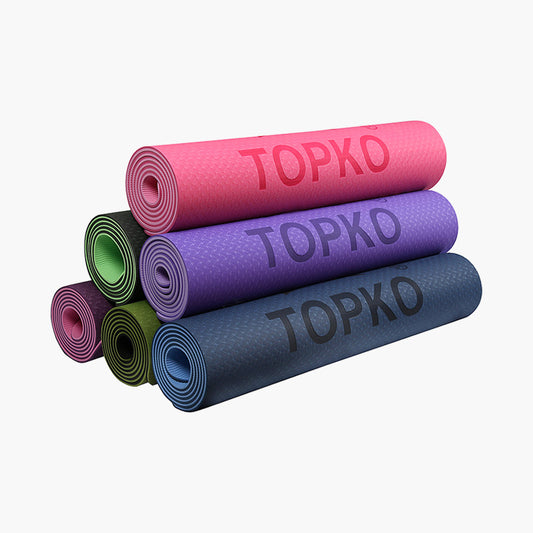
In B2B yoga mat procurement, thickness selection may seem simple, but it directly affects the product’s user experience, target audience, pricing strategy, and ultimately, sales performance. For B2B customers such as gyms, yoga studios, and wholesalers, choosing the right thickness not only enhances user experience but also determines the product’s competitiveness in the market.
As a B2B procurement decision-maker, the two most common questions are: “Can I customize the thickness of the yoga mat?” and “Which sells better, 6mm or 8mm?”
As a manufacturer with 15 years of experience in fitness equipment production, TOPKO offers an in-depth analysis based on global market data to help optimize your product line configuration.
I. Can Yoga Mat Thickness Be Customized?
The answer is yes. Professional yoga mat manufacturers fully support thickness customization, which has become a standard part of OEM/ODM services.
The common thickness range for yoga mats is between 1mm and 10mm, with mainstream thicknesses including:
1-3mm: Travel mats, portable mats
4-5mm: Standard thickness, suitable for daily practice
6mm: Thickened version, providing extra cushioning
8-10mm: Extra thick version, suitable for rehabilitation training or individuals with sensitive joints
TOPKO's thickness customization capabilities include: precise thickness control (tolerance within ±0.3mm), accurate thickness matching for multi-layer composite structures, small-batch customization starting from 300-500 units, and rapid thickness validation with 1-2 samples. Whether you need 6mm, 8mm, or any other special thickness, we can achieve it.

II. 6mm vs 8mm: Core Differences
The thickness of a yoga mat directly impacts its comfort, support, and stability. The 6mm and 8mm mats each have distinct features and are suited for different use cases.
6mm Yoga Mats
6mm yoga mats are extremely popular and suitable for most yoga practitioners, especially those engaging in basic yoga and light exercises. They provide sufficient comfort while maintaining good stability.
Advantages of 6mm Mats:
Portable and Lightweight: The 6mm thickness is relatively thin, making it easy to carry, perfect for users who enjoy outdoor activities or travel.
Good Stability: It provides stability for standing and balancing poses in yoga, ensuring a solid foundation during practice.
Versatile: 6mm mats are suitable for most types of yoga, especially traditional yoga and Pilates.
Disadvantages of 6mm Mats:
Less Joint Protection: For practices requiring more cushioning, such as power yoga or high-intensity training, the 6mm thickness may not provide sufficient protection.
8mm Yoga Mats
The 8mm yoga mat is thicker and offers more comfort and cushioning, making it ideal for users with higher joint protection needs. It’s an excellent choice for long-duration practice and high-intensity workouts.

Advantages of 8mm Mats:
Stronger Cushioning: The 8mm thickness provides extra cushioning, which is especially beneficial for protecting knees, elbows, and other sensitive joints during practice.
Higher Comfort: Ideal for extended sessions, it helps reduce pressure from the floor, enhancing overall comfort during practice.
Suitable for Intense Training: For practices like power yoga or physical training that require more support and comfort, the 8mm thickness is preferable.
Disadvantages of 8mm Mats:
Slightly Heavier: Due to the increased thickness, 8mm mats tend to be heavier, making them less portable compared to 6mm mats.
Slightly Reduced Stability: The added thickness may slightly reduce stability when performing certain precise balance poses.
III. Market Performance: 6mm vs 8mm – Which Sells Better?
Based on industry research and TOPKO’s sales data analysis:
6mm Yoga Mats: Currently, the most popular thickness, accounting for approximately 45-50% of total market sales. It is considered the "golden thickness" — achieving the best balance between cushioning, stability, and portability. It is the preferred choice for most yoga studios and home users and is an ideal option for mass market coverage.
8mm Yoga Mats: Holding a market share of around 20-25%, but showing significant growth. With the rise of rehabilitation yoga, therapeutic yoga, and the expanding fitness demographic among older adults, demand for 8mm and thicker mats is rapidly increasing. At the same time, premium brands are marketing 8mm mats as a "luxury comfort" feature, offering higher product premiums.
Other Thicknesses: 4-5mm mats account for about 20%, and 1-3mm travel mats make up around 10%.
IV.Choosing the Right Thickness: Decision-Making Based on Market Position
For B2B customers, choosing between 6mm and 8mm depends on your market needs, target audience, and product positioning.
If your customer base is broad, with most being basic yoga practitioners, the 6mm yoga mat is a safer choice. It covers the mainstream consumer group, is cost-effective, and is ideal for quickly gaining market share. We recommend making it your main product, accounting for 60-70% of your product line.
If your target market focuses on comfort, joint protection, or caters to older or rehabilitation groups, the 8mm yoga mat will be more appealing. It can be used as a differentiating selling point and support higher brand premiums, especially when combined with eco-friendly materials like natural rubber. We suggest allocating 20-30% of your product line to 8mm, complementing the 6mm offering.
Regardless of the thickness you choose, customization services offer greater flexibility and competitive advantage for your brand. TOPKO supports thickness customization and small batch testing, helping you precisely capture market trends and meet diverse consumer needs.